About Us General Program R&D Center Medicinal Plant Center Resources
Home
   
  Newsletter
To receive our bimonthly Newsletter, enter your email address, choose a content format and click "Subscribe."

HTML Text
 
   
  Plant of the Month

Urtica pilulifera
Roman Nettle
Family: Urticaceae
The leaves of this annual plant have stinging hairs, causing irritation to the skin. This action is neutralized by heat so the cooked young leaves are perfectly safe and nutritious. Young leaves should be used because older leaves develop gritty particles called cystoliths which irritate the kidneys. Foliage is used traditionally to treat cancer, stomach and intestine pains, liver diseases and circulatory system. Seeds are used to treat bed wetting.


Rikaz Statistic of the Month

The labor force participation rate among the Palestinians in Israel is 43.6%, compared to 57.1% among the Jewish population.


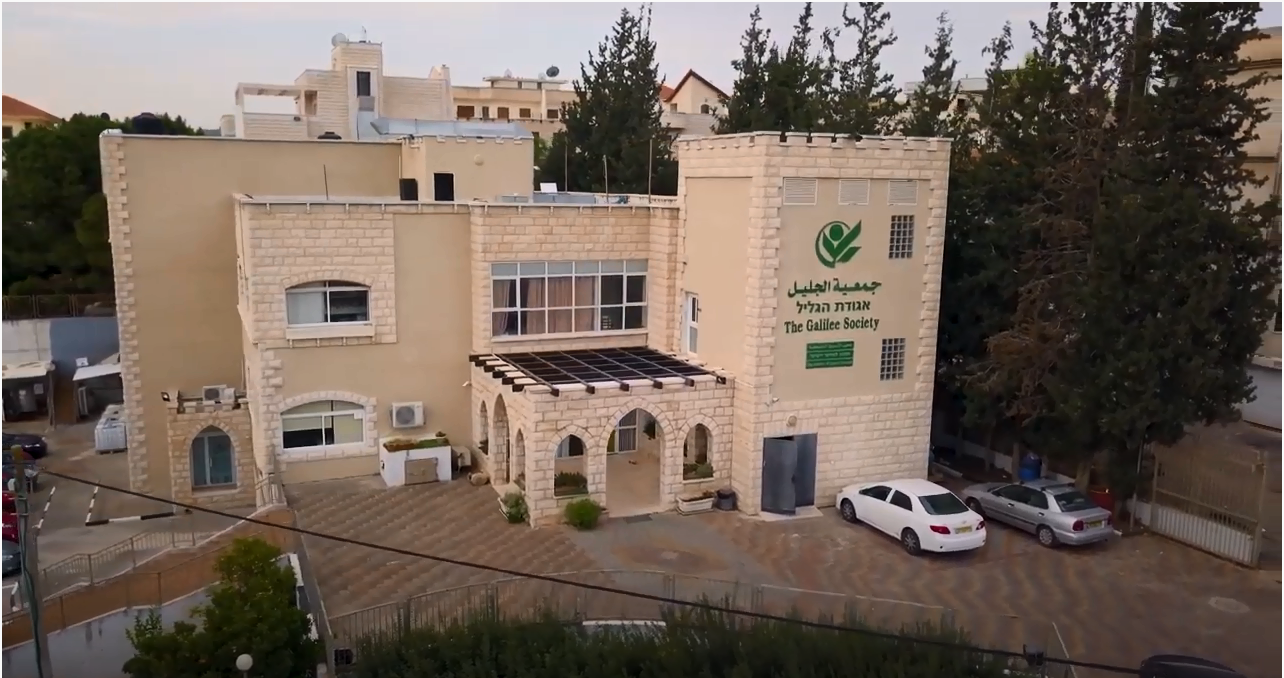
The Galilee Society
P.O. Box 330
Shefa-Amr 20200
Israel
TEL 972 4 9861171
FAX 972 4 9861173
admin@gal-soc.org


The Galilee Society
The Arab National Society for Health Research and Services

The Galilee Society − The Arab National Society for Health Research and Services − strives to achieve equitable health, environmental and socio-economic conditions for Palestinian Arabs in Israel.


Palestinian citizens of Israel today comprise about 20% (1.2 million) of the population. They live primarily in the Galilee (in northern Israel), the Triangle (hugging the green line separating the northern perimeter of the occupied West Bank) and in the Negev desert. Palestinians in Israel do not serve in the military, with the exception of the Druze and some Bedouins.

Pre-1948, there were 950,000 Palestinians living in what is now Israel. Of these, 800,000 fled in 1948, to the West Bank, Gaza and to neighboring Arab countries. Of the 150,000 that stayed, one-quarter are internal refugees, forced from their homes in 1948 but never allowed to return. From 1948 until 1966, Palestinian citizens in Israel were subject to military rule, curtailing their civil liberties and routinely harassing community leaders. Martial law was repealed in 1967, but the Palestinian minority is still far from receiving equal consideration, under the law or otherwise.

Funding levels for Palestinian schools and infrastructure receive far less funding than their Jewish counterparts. This leads to a high-dropout rate (3 times the Jewish rate) and the inability of Palestinian localities to expand naturally as their populations grow. Laws such as the Nationality and Entry into Israel Law disallow Palestinian citizens of Israel from marrying Palestinians living in the West Bank or Gaza. The law does, however, allow Jewish Israelis to marry residents of settlements located in the West Bank or Gaza Strip. Unequal treatment of the Palestinian minority in Israel is widely acknowledged by the government, but has yet to be addressed in a systematic manner.


Health Rights Center
Environmental Justice Center
Naqab Department
Rikaz Databank
Regional Research and Development Center
Al-Maissam Medicinal Plant Center
 

» Powered by
Ahmad Sheikh Muhammad

Home | Sitemap | Contact Us
Copyright © 2005 The Galilee Society
The Arab National Society for Health Research & Services